Small business finances can be hard to manage. Organized books cut stress and help you make smarter decisions. Simple habits can make bookkeeping easier and help your business succeed. These four tips will help you stay organized and keep your financial records accurate and accessible.
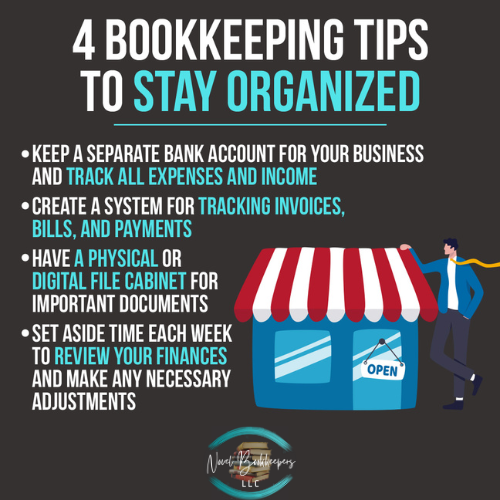
1. Keep a Separate Bank Account for Small Business Finances
Open a bank account for business transactions only. Mixing personal and business expenses creates problems, especially at tax time. But a separate account makes tracking easy and keeps your books correct.
Pro Tip:
- Many business bank accounts offer free or low-cost options tailored to small businesses.
- Choose one that works with your bookkeeping software to simplify your small business finances and record all payments easily.
2. Create a System for Tracking Invoices, Bills, and Payments
Lost invoices hurt cash flow, but a tracking system can help. Use it to manage bills and invoices easily. Digital tools like QuickBooks or manual systems can help, as long as you stay consistent.
Why it Matters: A good tracking system is key for small business finances. It helps you avoid late fees, build strong vendor ties, and keep cash flow steady for long-term success.
3. Organize Documents to Support Organized Books
Whether physical or digital, having one place for key documents matters.
What to Organize:
- Contracts
- Tax returns
- Receipts
- Other important records
Why it Matters:
Keeping documents organized helps maintain clear books, especially for audits or tax season. Cloud storage keeps contracts, tax returns, and receipts safe and easy to find.
Remember: IRS guidelines state to keep certain records for at least three years, while others might need to be kept longer. For more details on keeping records, refer to the IRS guidelines.
4. Schedule Weekly Financial Check-ins
Consistency is key to organized books. Each week, review records, match accounts, and make adjustments. This habit not only keeps your books clean but also gives you helpful insights into how your business is doing. Sorting expenses correctly can make your small business finances easier. Talk to a bookkeeper or accountant to make sure you are doing it the right way.
Set a Routine: Pick a time that works best for you and make it a must-do for your business.
Why Organization Matters in Bookkeeping
An organized bookkeeping system does more than keep your business following rules. It provides peace of mind, helps you make better financial decisions, and prepares you for growth opportunities. Staying organized sets the base for long-term success.
Let’s simplify your small business finances and take your business to the next level—contact Novel Bookkeepers today!