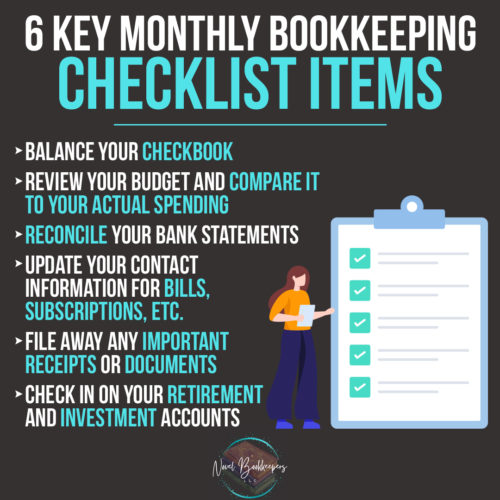
Balance Your Checkbook
Bookkeeping 101 suggests that balancing your checkbook would seem like a “no brainer.” You would be surprised by the number of individuals who never learned how to do just that. You have expenses that you have paid, so you have to make sure you record them. This is important because sometimes you pay bills and they have not cleared your bank account yet. Balancing your checking account can give you a better picture of where your money is. Most accounting software will utilize this information to ensure you have captured all the information needed for the ins and outs of your money. It is also important to understand the concepts behind it so you can ensure your books are accurate and that you can reconcile your bank statements.
Review & Compare Your Budget to Actual Spending
Budgeting, simply defined, is just a tally of the money you expect to spend or receive during a specific period of time. Bookkeeping can sometimes rely heavily on proper budgeting. In a perfect world, your transactions coming in and going out would align perfectly with your expectations, but this is a business world and you have to be more diligent and flexible to accommodate those unexpected changes. You want to make sure that the money you receive and spend align closely with what was expected according to your budget. “But, Amanda, what if I don’t have a budget?” Fear not, because I just so happen to know a pretty handy virtual bookkeeper that can help with that very task ;-). What should you do if your bookkeeping depicts that your actual numbers are way off from your budgeted numbers? Make the necessary adjustments. Maybe you had to spend a little heavier on office supplies this month. Simply adjust your budget figures to spend less on office supplies the following month. For more tips and tricks on budgeting, check out this blog post I made that really dives in.
Reconcile Your Bank Statements
This seems very similar to balancing your checkbook, right? So what is the difference? Well, balancing your checkbook is the act of making sure all your transactions are recorded (very important for bookkeeping!). Reconciling your bank statement ensures that the transactions you recorded are accurate and accounted for. For example, if you accidently record the same transaction twice or forget to record a customer payment, a bank reconciliation would help show that something is amiss.
Update Your Contact Information for Bills, Subscriptions, etc.
Despite the fact that your contact and other information may not change on a monthly basis, I still wanted to throw in this tip. Giving your bills, subscriptions, etc. a monthly glance to ensure everything is up to date can aid in giving you reminders you might have otherwise forgotten about. For example, maybe your spending card expired and you need to update your payment information. Maybe you no longer need a particular subscription or membership because it no longer benefits you or the the cost is too high. Whatever the reason, checking in on these items on a regular basis is a good habit to get into. I suggest making it part of our mon
File Important Documents
You paid your bills, updated your subscriptions, balanced your checkbook, reconciled your bank statement, now what? Bookkeeping is more than just recording and organizing the transactions through software. You also have to organize the documents that you recorded. These items can cause a ton of clutter for your workspace, and you want to be able to reference them for future. Having a structured filing system can aid in this, whether the files are physically on your desk or virtually in your downloads file on your computer. Make sure your filing system makes sense, others can follow along if needed, and be consistent each month.
Review Retirement and Investment Accounts
A final tip I want to touch base with is reviewing your retirement and investment accounts. A lot can change in a month’s time. Certain stocks may dip and you might want to reallocate them to another investment. You might want to spread your retirement accounts into multiple resources in hopes of seeing more gains. You may want to dedicate a set amount for the stock game and any money above that amount could go into a savings account. Whatever your decisions are with your investments, it is good practice to review each month. Simply make it part of your monthly bookkeeping routine to ensure your accounts are in good health.